
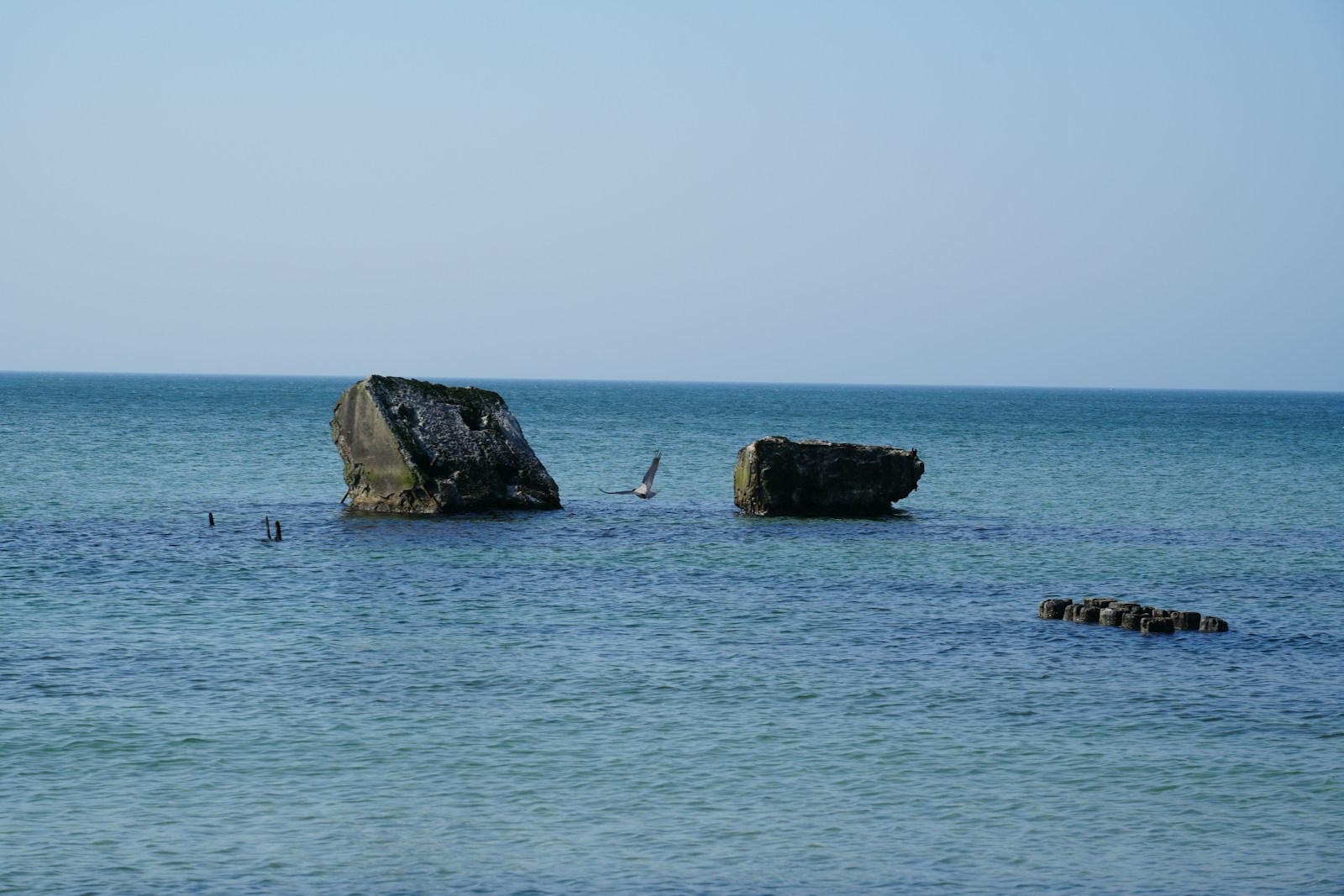
Did you know that twenty-five meters beneath the waves off the southern coast of Yonaguni Island, at the western edge of the Ryukyu chain where Japan trails off toward Taiwan, a massive stepped stone structure rises from the seabed with edges so straight and corners so right-angled that when Japanese diver Kihachiro Aratake first photographed it in 1986 he was convinced he had found the ruins of a lost civilization? Forty years, hundreds of dives, and a sustained geological debate later, the Yonaguni monument has become one of the most argued-over features on the planet – and the argument is more interesting, and more honestly inconclusive, than either the « obviously artificial » or « obviously natural » camp will typically admit.
What the monument actually is
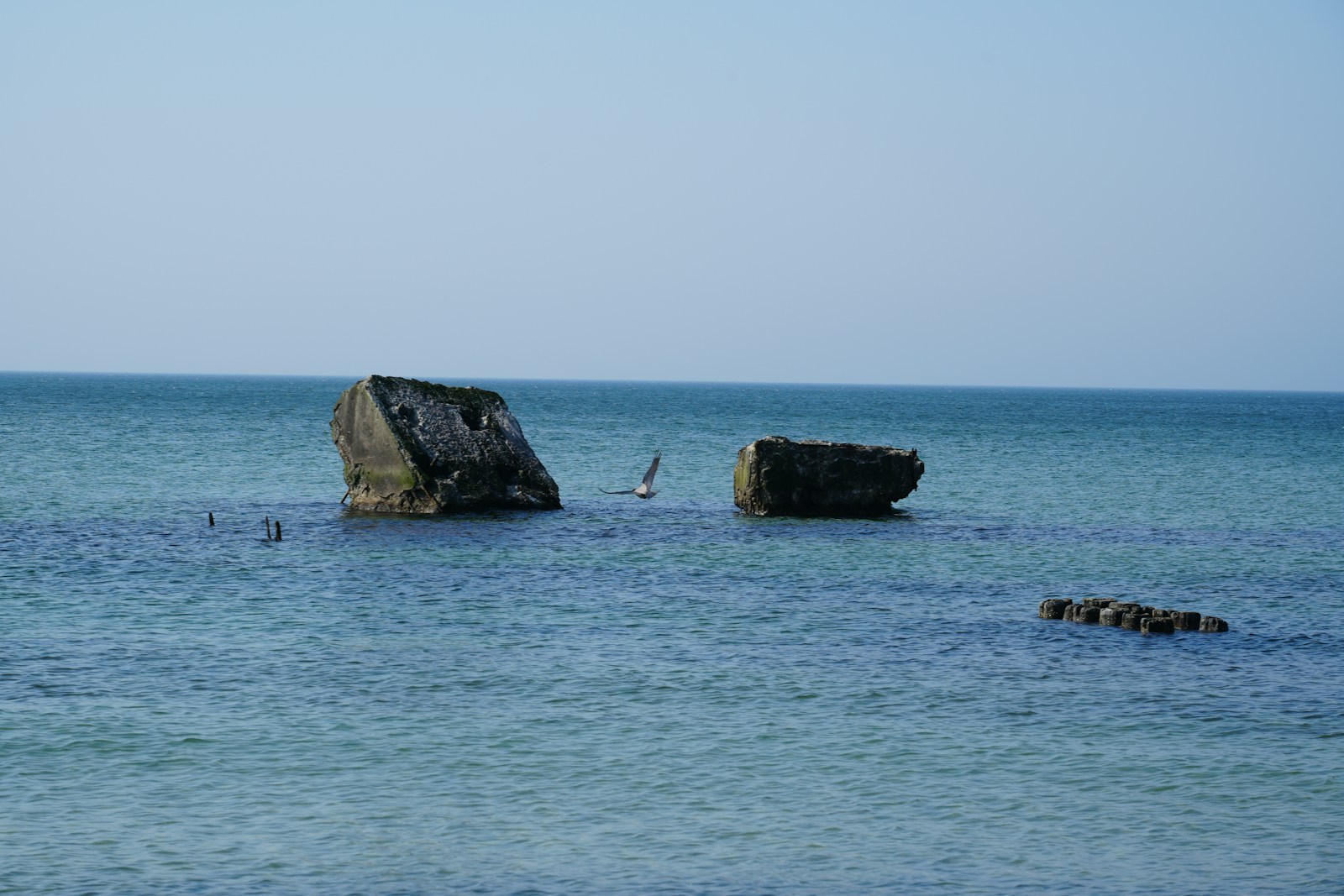
The Yonaguni Monument, or Iseki Point as it is known locally, is a submerged rock formation approximately 150 meters long, 40 meters wide, and rising about 27 meters from the seabed, with its uppermost surface lying approximately five meters below the ocean surface at low tide. Its defining features include flat terraces that step upward like a pyramid, straight-edged walls, right-angled corners, what appear to be carved channels or drainage features, and in certain places, shapes that resemble steps, a column base, and – most famously – what some divers interpret as a face carved into a larger rock face some distance from the main structure.
The sandstone in which it is formed is of Lower Miocene age, approximately 20 million years old. Whatever carved or shaped it – nature, human hands, or some combination – the raw rock itself long predates any human presence in the region.
The case for natural formation
The most authoritative geological voice in the debate has been Masaaki Kimura of the University of the Ryukyus, who initially argued the formation was partly or wholly artificial, and Robert Schoch of Boston University, who reached the opposite conclusion. Schoch’s position, published in journal articles and elaborated in his book Voices of the Rocks, is that the Yonaguni formation is consistent with natural fracture patterns typical of the specific sandstone at the site. The sandstone fractures along horizontal bedding planes and vertical joints, which together produce blocky, stepped features that can resemble architecture.
Schoch’s argument has several strengths. The sandstone at Yonaguni genuinely does fracture in this way, and similar – though less dramatic – features can be observed in terrestrial outcrops on Yonaguni Island itself, which were never submerged and which no one proposes are artificial. The ocean currents in the area are strong and have been working on the submerged rock for thousands of years, and wave and current action on regularly-fractured sandstone can enhance the stepped appearance.
The mainstream geological and archaeological consensus, as it stands in 2026, leans toward a natural formation with perhaps minor human modification at most. The Japanese government’s Agency for Cultural Affairs has never designated the site as an archaeological monument, a decision widely interpreted as reflecting the agency’s geological assessment.
The case for human modification
Kimura’s counter-argument, and the reason the debate has not simply closed, rests on several features he and other divers argue cannot be fully explained by natural fracturing:
- Right-angled corners that are sharper and more consistent than typical joint intersections.
- Flat terrace surfaces that are unusually clean given the age of the formation and the wave environment.
- Features interpreted as carved channels, drain-like grooves, and what appears to be a carved quadrilateral recess.
- Stones that appear to be detached from surrounding bedrock and relocated – the so-called « turtle stone » being one example.
- A pattern of damage and tool-like marks that Kimura interprets as evidence of quarrying.
Kimura’s published case, most fully elaborated in papers through the 2000s, is not that Yonaguni is entirely artificial but that natural features were modified by human hands, possibly during a period of lower sea levels in the last glacial maximum roughly 10,000 to 12,000 years ago when the site would have been above water. This timing would place any human modification before the known beginning of monumental stone construction anywhere else in East Asia, which is one reason mainstream archaeologists have been reluctant to accept the interpretation.
The Aratake discovery and the first forty years of diving
The documentary record of Yonaguni as a known site begins in the spring of 1986, when Kihachiro Aratake, a local diver who ran a sport-diving operation on Yonaguni, was scouting new sites off the island’s southern coast for his clients, particularly for hammerhead shark encounters that draw divers to Yonaguni in the winter months. Aratake had dived the area for years. On one of those scouting dives he surfaced over what appeared to be a massive stone terrace he had never noticed, partly because the current visibility and angle happened to align on that day in a way that made the structure legible where it had previously been read as ordinary seafloor.
Aratake reported the find to local authorities and invited Masaaki Kimura, then at the University of the Ryukyus, to dive the site. Kimura’s first descents in the late 1980s produced the preliminary measurements that anchored the subsequent debate: the main terrace measures roughly 50 meters on one axis, the stepped faces drop in courses of between 50 centimeters and 2 meters, and the rightmost edge forms what Kimura described as a nearly perfect 90-degree corner. Aratake himself never claimed certainty about the origin; his role, which he has maintained into his eighties, has been to make the site accessible to scientists and to skilled divers who want to form their own judgments.
Commercial diving to Yonaguni is now a fixture of the Okinawan tourism economy, with perhaps ten thousand divers visiting the monument annually in the post-pandemic years. This has complicated the science by increasing the number of amateur reports and the number of photographs without standardized documentation, but it has also meant that the site is continuously observed, and no significant structural change has been documented since the late 1980s. Whatever Yonaguni is, it is stable.
Robert Schoch’s analysis and the geological counter
Robert Schoch, a geologist at Boston University best known for his argument that the Great Sphinx of Giza shows evidence of water erosion consistent with a much earlier origin than Egyptological consensus allows, dived Yonaguni in 1999 at Kimura’s invitation. Schoch had been expected – by both Kimura and the film crew accompanying them – to confirm the artificial interpretation. He did not. His published account, first in a series of articles and later in Voices of the Rocks (1999) and Pyramid Quest (2005), concluded that the Yonaguni features are consistent with natural geological processes acting on the specific sandstone of the site.
Schoch’s argument rests on three observations. First, the sandstone at Yonaguni fractures along two sets of joints at angles very close to 90 degrees, which is a property of the rock’s bedding rather than a sign of quarrying. Second, the terrain above water on Yonaguni itself, in coastal outcrops at Sannin-dai and Tachigami-iwa, shows similar stepped fracture patterns on a smaller scale in terrain that was never submerged and has no human history associated with it. Third, the sharpness of edges and flatness of surfaces at the monument is not a reliable marker of artificiality when the rock is a medium-grained sandstone with well-defined bedding planes, which fractures in characteristic blocky patterns under the stresses of tectonics and wave action.
Schoch’s position is not that human modification is impossible but that the default assumption in geology is that unusual rock formations are natural unless positive evidence indicates otherwise, and that the positive evidence at Yonaguni is ambiguous. He has been explicit that he considers the Egyptian Sphinx case stronger than the Yonaguni case on the available evidence, which is notable coming from a researcher who has been willing to argue against mainstream archaeology in other contexts.
Kimura versus the natural-formation geologists
The debate between Masaaki Kimura and the geologists who favor a natural explanation is one of the most productive unresolved disagreements in underwater archaeology, partly because both sides are scientifically serious and partly because neither has achieved a decisive argument. Kimura’s position, most fully developed in papers and conference presentations through the 2000s and updated in a 2007 presentation to the Japan Geoscience Union, rests on features he argues are not reproducible by natural fracture: the « turtle stone » that appears detached from surrounding bedrock and positioned at a different orientation, the set of what he interprets as quarrying marks on a specific terrace face, and the pattern of drainage channels he believes were cut rather than weathered.
Geologists who disagree – including Patrick Nunn of the University of the South Pacific, who has written comparatively on submerged landforms in the western Pacific, and Boyd Dixon, whose surveys of Okinawan coastal geology predate the Yonaguni controversy – have pointed out that detached blocks are common along wave-scoured coasts, that mark patterns Kimura reads as tool-cut can be produced by differential weathering of harder and softer bedding layers, and that the drainage features are consistent with the dissolution patterns of sandstone containing calcium carbonate cement.
The most specific technical exchange came at a 2004 symposium where Kimura and the marine geologist Teruaki Ishii of the University of Tokyo presented opposing analyses of the same terrace. Ishii argued the terrace was a natural joint-controlled erosion feature; Kimura responded that the joint spacing required for that explanation was inconsistent with the visible rock structure. Neither side conceded, and the symposium produced no joint statement. Nearly every Yonaguni publication since 2005 has cited this exchange as the point at which the debate became professionally entrenched rather than progressing.
The sea level question
One aspect of the debate is settled: at the Last Glacial Maximum, roughly 20,000 years ago, global sea levels were approximately 120 meters lower than today, and the Yonaguni site would have been dry land. The strait between Yonaguni and Taiwan, today 108 kilometers wide and over 2,000 meters deep in places, would still have been a substantial water barrier even at lowest sea stand, but the site itself would have been part of Yonaguni Island’s extended coastline rather than submerged.
Sea levels rose to something close to modern levels by approximately 7,000 years ago, after a period of relatively rapid rise. If the monument was modified by humans, the modification must have occurred before the site was submerged – which places it in the late Pleistocene or very early Holocene, a period for which the archaeological record of the Ryukyu Islands is thin but not empty. Human presence in the Ryukyus dates back at least 30,000 years based on paleolithic remains at other sites.
The « face » and the cultural imagination
Perhaps the most contested feature is the so-called face – a rock formation some distance from the main structure that, from certain angles in certain light, resembles a human face. Kimura has argued it shows evidence of deliberate carving. Schoch and most geologists consider it an example of pareidolia, the human tendency to see faces in random patterns. Rocks resembling faces exist in enormous numbers around the world, and the absence of similar carving throughout the rest of the site weakens the interpretation that a single isolated face was deliberately sculpted.
What recent investigations have added
The last decade has seen continued diving investigation but limited new peer-reviewed publication. Underwater photogrammetry techniques have improved, and high-resolution 3D models of the site now exist, though access to them remains partly restricted. These models have allowed more precise measurement of features including corner angles and terrace flatness. The results have not been decisive: the measurements are consistent with natural fracture patterns of that specific sandstone but are at the extreme end of what natural fracture typically produces, which is where the interpretive ambiguity lives.
A 2022 review in the Journal of Maritime Archaeology summarized the state of the debate as one where neither the « fully natural » nor « partially artificial » hypothesis has been conclusively disproved, and called for additional systematic investigation. That investigation has not fully materialized, partly because of the costs and difficulties of underwater archaeological work and partly because of the reputational hazard for mainstream archaeologists associating with a site that has become popular in speculative alternative-history circles.
Why the debate is genuinely difficult
The Yonaguni case is epistemologically harder than it first appears. A formation that is entirely natural would not necessarily look entirely natural to every observer, because sandstone fracture can produce features that cross the threshold where humans intuitively read « architecture. » A formation that is partly modified could look almost entirely natural if the modifications were subtle and the site has been eroded for 10,000 years of wave action. The middle cases – slight human modification of a natural feature – are exactly the cases for which underwater archaeology has the fewest established diagnostic tools.
Compounding this, the site attracts two kinds of visitor: cautious scientists who dive it briefly and rarely, and passionate amateurs who dive it repeatedly and publish extensively. The loudest voices in the popular debate are often the least qualified to settle it, and the most qualified voices have generally declined to engage with the popular debate at all. This produces an environment in which the scholarly consensus (natural, possibly with minor modification) is quieter than the amateur consensus (clearly artificial), with the result that the public impression of the evidence skews more speculative than the underlying research supports.
What we can fairly say
The Yonaguni monument is a real and remarkable feature. Its stepped, angular appearance is not a tourist-industry fabrication – it looks the way it looks, and the features interpreted as steps and walls are genuinely unusual even by the standards of sandstone fracture geology. Whether those features were produced entirely by natural processes, by human modification of natural features during a pre-submergence period roughly 10,000-12,000 years ago, or by some combination, is not currently resolvable by the evidence available and may not be resolvable without substantially more invasive investigation than has so far been permitted.
The most honest position in 2026 is probably this: the mainstream scholarly judgment favors natural formation, the dissenting specialist position of Kimura and others has not been refuted to a degree that would justify closing the file, and the popular « lost civilization » narratives that have grown up around the site substantially overstate what either camp of serious researchers actually claims. It remains, in the real sense, a mystery – just not the mystery that Saturday-afternoon documentary films usually present.
Sources and further reading
Robert Schoch’s Voices of the Rocks lays out the natural-formation case. Masaaki Kimura’s technical papers through the 2000s lay out the modified-formation case. The BBC’s BBC Future archive and Smithsonian Magazine have both covered the controversy with reasonable balance. For the broader geological context of Ryukyu sandstone formations, the Geological Society of Japan has published several accessible overviews. Nature has covered related underwater archaeology debates though not Yonaguni directly in recent issues.
For a companion piece on underwater archaeology disputes more broadly, see our examination of genuine underwater archaeology discoveries and how they differ from speculative claims.
The sea has swallowed more than its share of human history. Some of what it holds will be recovered in the next century as ocean archaeology matures. Whether Yonaguni will be part of that recovered history, or whether it will remain what mainstream science believes it already is – a remarkable natural sculpture – is one of the quieter open questions in the field.
Votre analyse