
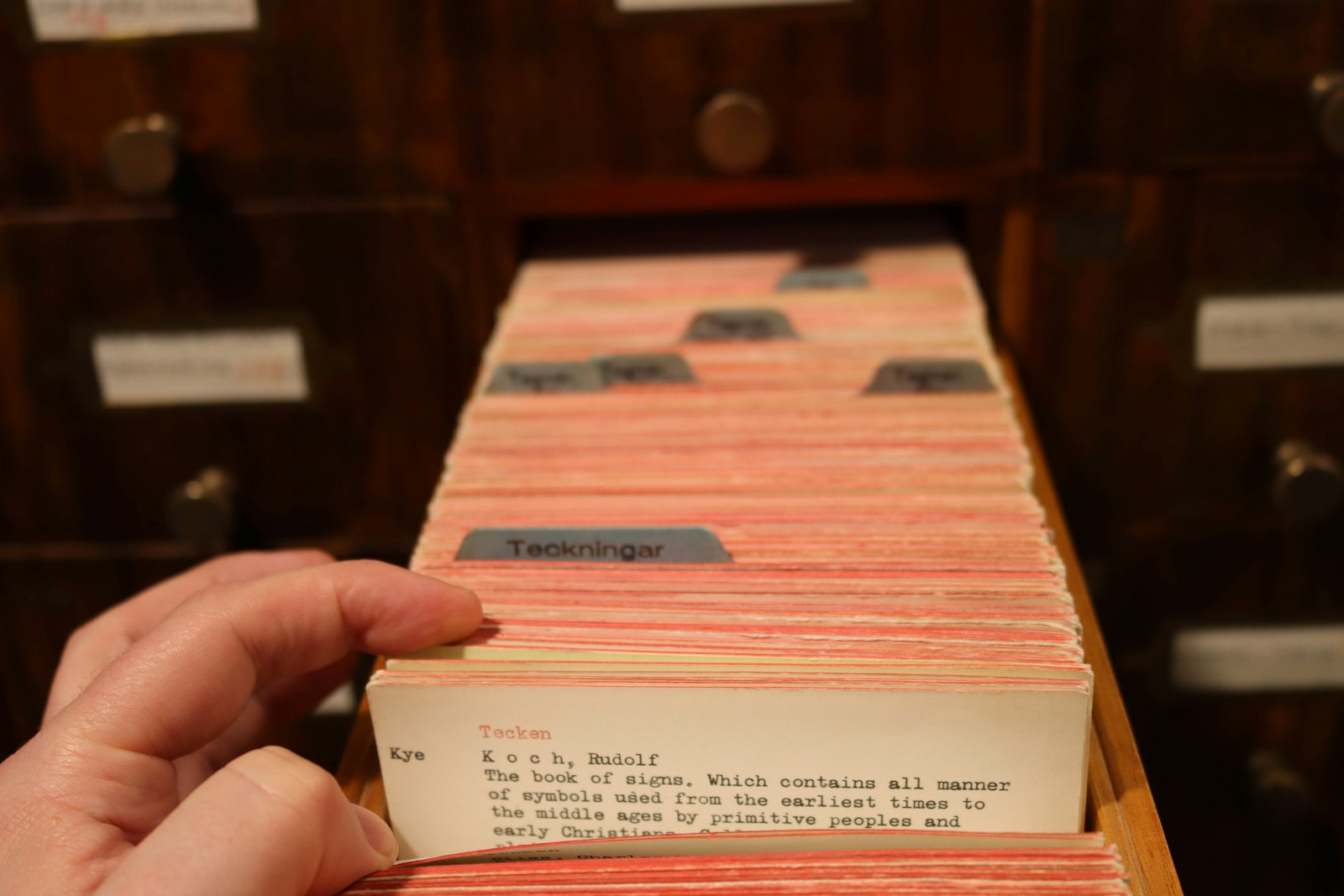
The first time I read the actual declassified MKULTRA budget memos, in the National Security Archive’s George Washington University reading room, I was struck not by the dramatic content but by the bureaucratic boredom of the documents. Most of the file is procurement requests and conference minutes. The genuinely disturbing material was always going to be banal in form, because that is how state programs work. What made MKULTRA monstrous was not the cinema-style presentation but the routine institutional context that made it possible for thousands of pages of human-experiment paperwork to flow through ordinary administrative channels for years.
This piece walks through six Cold War programs that were classified at the time and have since been wholly or partially declassified. Each is sourced primarily through the actual declassified record — Freedom of Information Act releases, Senate Church Committee findings, the National Security Archive’s published holdings — rather than secondary speculation. Several remain partially redacted, and what is described below is the publicly verifiable share.
1. MKULTRA — the human experimentation program
MKULTRA was a CIA program operating from 1953 to roughly 1973, focused on behaviour modification through chemical, biological and radiological means. The program funded experiments at more than eighty institutions, including universities, hospitals and prisons, often without the knowledge or consent of the institutional subjects involved. Test substances included LSD, mescaline, sodium amytal and several biological agents.
The program first became publicly known through reporting by Seymour Hersh in The New York Times in December 1974, then through the Church Committee Senate hearings of 1975. CIA Director Richard Helms had ordered most of the central documentation destroyed in 1973, but financial records survived in a separate archive, allowing partial reconstruction. Roughly 20,000 pages of MKULTRA financial documents were declassified between 1977 and 2018. The full operational record is gone permanently.
The most documented case linked to MKULTRA is the death of Frank Olson, a US Army biochemist who fell from a New York hotel window in 1953, nine days after being secretly dosed with LSD by CIA personnel. The Olson family’s civil suit was settled in 1976 with a 750,000-dollar payment and a personal apology from President Gerald Ford.
2. CORONA — the satellite reconnaissance program
CORONA was the United States’ first photographic-reconnaissance satellite program, operating from 1959 to 1972. Over 145 launches, the program returned more than 800,000 satellite images of Soviet, Chinese and other foreign territory. The film canisters were physically ejected from orbit, parachuted through the atmosphere, and caught mid-air by C-119 aircraft over the Pacific — a technique declassified only in 1995 by executive order from President Bill Clinton.
The CORONA program is now considered one of the most consequential intelligence operations of the Cold War, providing the first reliable photographic intelligence on Soviet missile deployment. The total program cost was approximately 850 million dollars in mid-1960s currency. The declassified imagery has since proven valuable for civilian use, including environmental change documentation, archaeological survey and historical cartography. The full archive is now publicly accessible through the United States Geological Survey EarthExplorer system.
3. Acoustic Kitty — the cat surveillance program
Acoustic Kitty was a CIA program in the 1960s that attempted to use surgically modified cats as covert listening devices. The cat was implanted with a microphone in the ear canal, a battery in the abdomen, and a transmitting wire along the spine. The program reportedly cost approximately 20 million dollars, according to documents declassified in 2001.
The program was abandoned after testing failures. Various accounts circulate about the specific reasons; the most-cited version involves a test cat being released near a Soviet target site and being struck by a taxi. The official declassified documentation does not specify the failure mode, indicating only that « the program could not be developed to a level of useful field capability ». Acoustic Kitty has since become a kind of touchstone in intelligence-history writing for the gap between project ambition and operational reality in covert programs.
4. MK-NAOMI — the chemical and biological weapons stockpile
MK-NAOMI was a CIA program, operating in coordination with the US Army’s Special Operations Division at Fort Detrick, that developed and stockpiled chemical and biological agents for covert use. The program operated from approximately 1953 to 1970. Stockpiled materials included anthrax, encephalitis viruses, botulinum toxin, and a range of incapacitating agents.
The program first became public in 1975 through the Church Committee, which forced the disclosure of unauthorised retention of biological agents after President Richard Nixon’s 1969 order to destroy all such stockpiles. The CIA had quietly retained quantities of several agents at Fort Detrick despite the destruction order. Senator Frank Church described the program in committee testimony as evidence of « a rogue elephant on the rampage » within the intelligence community — a phrase that became one of the defining quotations of the post-Watergate intelligence reforms.

5. Operation Mockingbird — the press contact network
Operation Mockingbird is the most contested and partially documented of the programs in this piece. It refers to a CIA effort, beginning in the early 1950s, to develop relationships with journalists and editors at major American news organisations for purposes of intelligence collection and information placement. The Church Committee’s final report (1976) confirmed that approximately 400 American journalists had carried out tasks for the CIA during the previous twenty-five years, including some who acted as full intelligence operatives while maintaining cover as reporters.
Several of the specific operational details remain contested in declassified scholarship. What is documented is that The New York Times, Time, Newsweek, CBS News and several other major outlets had editorial-level relationships with CIA personnel during the height of the program. Director George H. W. Bush issued an order in 1976 prohibiting the use of accredited US journalists as intelligence assets, in response to Senate pressure following the Church revelations. Some elements of media-intelligence cooperation survived in altered form afterward, as documented in subsequent FOIA releases.
6. Project SUNSHINE — the radioactive fallout study
Project SUNSHINE was a US Atomic Energy Commission program, operating from 1953 to 1956, that collected human remains — particularly bone tissue from infants and children — from around the world to measure global distribution of strontium-90 from nuclear weapons testing. The program collected samples from at least 1,500 cadavers, often without family knowledge or consent, drawing from hospitals and morgues in the US, Europe, Australia, Argentina and Hong Kong.
The full operational record was declassified in 1995 as part of the broader Department of Energy openness initiative under Secretary Hazel O’Leary. The Advisory Committee on Human Radiation Experiments report of 1995 identified Project SUNSHINE as one of several Cold War programs in which informed-consent norms were systematically violated for national-security research. The committee’s recommendations led to substantial reform of US federal research-ethics rules.
What the documentary record reliably supports
Declassified Cold War programs share several features that are worth noting because they cut against more theatrical conspiracy narratives. Most programs were bureaucratic in form, expensive, ineffective at their stated goals, and abandoned for routine institutional reasons rather than dramatic exposures. Most operated in compartmentalised units with limited coordination, which made them simultaneously more dangerous (no oversight) and more limited in scope (no sustained capacity).
The most reliable documentary archives for this material are the National Security Archive at George Washington University, the CIA’s own CREST (CIA Records Rechercher Tool) database, and the holdings of the Church Committee successor agencies. Scholarly historians who have done the most thorough work on this material include Tim Weiner, John Prados, Mary Ferrell Foundation researchers, and the National Security Archive’s senior fellows.
What is still classified and why
Substantial portions of the Cold War record remain classified, often under « intelligence sources and methods » exemptions that prevent disclosure of operational tradecraft even when the underlying program has been publicly acknowledged. The current rolling declassification rules require automatic review at twenty-five years, though agencies can request extensions, and routinely do.
The Senate Church Committee findings of 1976 remain the single most important public-disclosure event of the Cold War intelligence record. Subsequent declassifications, while extensive, have largely filled in details rather than revealing categorically new programs.
How declassification actually works
The mechanics of declassification are less dramatic than the term suggests. Most US Cold War records pass through one of three channels: automatic declassification at the 25-year mark under Executive Order 13526 (signed by President Barack Obama in 2009 and successor orders); mandatory review under the Freedom of Information Act, where members of the public, journalists or scholars file requests for specific records; and special-access declassifications driven by congressional inquiry or executive directive, such as the JFK Assassination Records Collection Act of 1992 and its 2017 to 2025 release sequence.
Each channel has different bottlenecks. Automatic declassification at 25 years is undermined by agency-requested extensions, which the National Archives Information Security Oversight Office has reported are now applied to roughly 40 percent of records eligible for automatic release. FOIA requests face long backlogs — average response time at the CIA exceeded 1,200 days in 2024 — and frequent rejections under exemption b(1), which protects classified national-security information. Special-access declassifications produce the most complete releases but happen rarely and typically under unusual political pressure.
Documents released under any of the three channels are often heavily redacted. The standard practice is to release the page with sensitive content blacked out, leaving the surrounding text visible. Researchers at the National Security Archive have developed techniques for cross-referencing redacted releases with later, less-redacted versions of the same document, which sometimes recovers blacked-out content from versions released to other parties under different exemptions. The technique was particularly productive in reconstructing parts of the MKULTRA financial record across the 1977, 2001 and 2018 release waves.
Comparative analysis: Soviet equivalents
Comparable Soviet programs have generally received less Western attention, partly because access to post-Soviet archives has been uneven and partly because the Soviet record-keeping tradition was less paper-heavy. Several documented Soviet equivalents are worth flagging for context. The KGB’s First Chief Directorate ran extensive press-influence operations across Europe and the Americas during the 1960s and 1970s, partially documented through the Mitrokhin Archive, which Soviet defector Vasili Mitrokhin smuggled to British intelligence in 1992.
Soviet biological and chemical weapons programs were enormous in scale and substantially less restrained than US equivalents. Biopreparat, the civilian-cover network of Soviet bioweapons facilities, employed up to 60,000 people at its peak in the 1980s and produced weaponised anthrax, smallpox, plague and several other agents. The program was first publicly described in detail by defector Ken Alibek in his 1999 memoir Biohazard, after his 1992 defection. Russian disclosure has remained limited.
The Soviet equivalent of MKULTRA was the much smaller Laboratory 12 program, which operated from approximately 1921 through the 1950s under various names within Soviet state security. Unlike MKULTRA, which targeted incapacitation and behaviour modification, Laboratory 12 focused primarily on undetectable poisons. The 1957 assassination of Ukrainian nationalist leader Lev Rebet in Munich and the 1959 assassination of Stepan Bandera, both using cyanide-spray weapons developed at Laboratory 12, are among the most documented operational uses.
Misconceptions that persist
Several persistent misconceptions distort public understanding of declassified Cold War programs. The first is that declassification means full disclosure. It does not. Most « declassified » programs have been declassified only in a narrow administrative sense — the existence of the program is acknowledged, but operational details, agent identities and many primary documents remain classified or have been destroyed.
The second is that the most lurid versions of these programs are usually the accurate ones. The opposite is closer to the truth. The actual MKULTRA documentary record describes a program that was bureaucratic, frequently incompetent and operationally limited, rather than the cinematic version popularised by film and television. Acoustic Kitty cost a fraction of the often-cited 20 million dollars by some scholarly accounts, and the program’s failures were technical rather than dramatic. Treating declassified records seriously requires accepting that the documentary truth is often less exciting than the rumour.
The third is that declassification is symmetrical across democracies. It is not. The United Kingdom’s declassification practices remain considerably more restrictive than American equivalents, with the 30-year rule (now extended to 20 years for new releases) routinely deferred for sensitive material. France’s declassification regime is similar. Russia under Putin has reversed much of the 1990s opening, and many records that were briefly accessible in the Yeltsin era have been recategorised as restricted. Country-by-country variation matters when interpreting comparative claims.
What the next two decades may reveal
Several Cold War programs remain partially or fully classified and are scheduled for staggered review through the late 2020s and 2030s. The most significant pending releases concern Vietnam-era covert action programs, the full record of the Reagan-era Central American operations, and the operational history of the National Reconnaissance Office during the 1970s and 1980s. The 25-year rule will also begin pulling early post-Cold War records (1991 onward) into automatic review starting in 2016 to 2024 release windows, which has already produced substantial new disclosures about the early 1990s Yugoslav wars and the post-Soviet transition.
The post-Cold War declassification waves
Beyond the Church Committee era, several substantial declassification waves have produced important historical material. The 1992 JFK Assassination Records Collection Act mandated public release of Kennedy assassination-related records, with successive release waves through 2017 and 2025 producing approximately 5 million pages of newly accessible documents. The 1995 Department of Energy openness initiative under Secretary Hazel O’Leary produced substantial disclosures about Cold War nuclear and human radiation experiments. The 2009 Executive Order 13526 created the framework for current automatic declassification at 25 years.
The 2010 to 2025 period has seen ongoing release of Cold War operational records under various FOIA pressures. The Freedom of Information Act amendments of 2016 and 2022 have made requests somewhat more efficient, though backlogs at major agencies remain substantial. The recent expansion of the National Archives’ digital reading rooms has made released documents substantially more accessible to researchers without requiring physical visits to archive facilities.
Several specific document collections deserve attention from researchers interested in Cold War intelligence. The CIA’s CREST (CIA Records Rechercher Tool) database, accessible through the National Archives, contains approximately 13 million pages of declassified documents. The State Department’s Foreign Relations of the United States series provides curated and indexed historical documents from each administration. The National Security Archive’s published document collections at George Washington University provide expert-curated thematic collections on specific Cold War topics.
For deeper reading
For the full Church Committee report, see the Wikipedia overview, which includes links to the original documents. The National Security Archive at George Washington University publishes substantial declassified-document collections. The US National Archives and Records Administration manages the rolling declassification programs and publishes a public reading-room interface for released records. Our archive on Cold War history is filed at complots gouvernementaux, with broader unsolved-mysteries coverage at mystères inexpliqués, and a separate thread on secret history following declassified document releases as they happen.
This article reflects publicly declassified documentary records as of early 2026; some details remain contested or partially redacted, and readers should consult primary archives for the most authoritative material.
Votre analyse