
More than 80 percent of the world’s ocean remains unmapped at high resolution, according to the General Bathymetric Chart of the Oceans (GEBCO) and its Seabed 2030 project. To put that another way: humanity has higher-resolution maps of the surface of Mars and the Moon than of the seafloor of its own planet. The deep ocean, defined here as the region below roughly 1,000 metres, is the largest single habitat by volume on Earth, and we know less about it than about any equivalent terrestrial environment. Most of the genuine mysteries left in modern science live in that water.
This piece looks at five mysteries that remain genuinely unexplained in the deep ocean — recorded acoustic anomalies, persistent biological riddles, mapping gaps, current patterns and a handful of well-documented sightings that resist conventional explanation. Each is sourced from peer-reviewed oceanographic literature rather than from speculative writing.
The Bloop and the resolution problem
In summer 1997, the United States National Oceanic and Atmospheric Administration’s hydrophone network in the Pacific recorded an extraordinarily loud underwater sound, detected on multiple sensors more than 4,800 kilometres apart. The sound, named the Bloop by NOAA scientist Christopher Fox, ramped rapidly in frequency, was louder than any known animal call, and was traced approximately to a remote area off the western coast of South America.
For more than a decade the Bloop’s origin was openly unknown. NOAA initially noted that the acoustic signature was consistent with a biological source, which led to a substantial popular-press response speculating about giant unknown creatures. In 2012, NOAA published a revised analysis attributing the Bloop to ice-quake activity, specifically the cracking of a large iceberg in Antarctic waters. The reassignment is now the standard scientific consensus.
The interesting feature of the Bloop story is what it reveals about the resolution limits of ocean acoustics. Hundreds of unexplained underwater sounds remain in the NOAA Pacific Marine Environmental Laboratory archive. Most have not been definitively attributed because the network has limited geographic coverage, the source location is rarely precise, and the acoustic environment is dense with overlapping signals from biological, geological and human sources.
The 52-Hertz whale
Since 1989, hydrophone arrays in the North Pacific have recorded the calls of an apparently solitary whale vocalising at 52 hertz, well above the 15-25 hertz range typical of blue whales and the 35-40 hertz range typical of fin whales. The whale, nicknamed « 52 Blue », has been tracked across decades but never visually identified. Recordings consistently show a single individual, with the call frequency drifting slightly downward over time as the animal ages — which is consistent with normal whale vocalisation patterns.
The most likely explanations are a hybrid blue-fin whale, a developmental anomaly in an otherwise normal individual, or a member of an undescribed deep-water population. None of these has been confirmed. A 2015 expedition led by film-maker Joshua Zeman attempted to visually locate 52 Blue and failed. The animal has been heard most recently in NOAA recordings from 2022, suggesting it remains alive and continues its calls.
The 52-hertz whale is one of the few remaining cases in cetology where a known individual animal has been tracked acoustically across decades without ever being seen.
The Milky Sea phenomenon
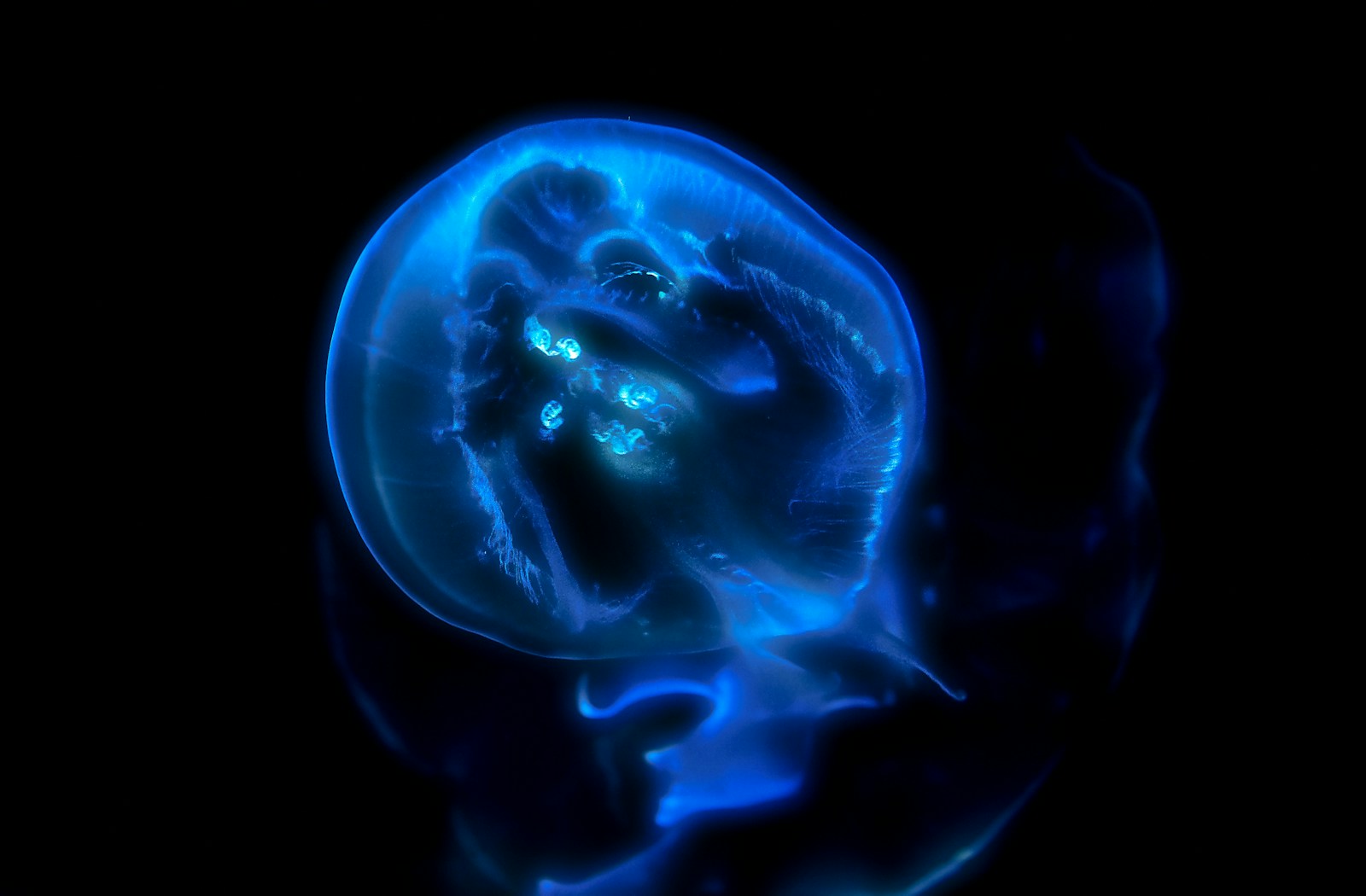
The Milky Sea is a documented but rarely observed bioluminescent phenomenon in which large patches of ocean glow uniformly with a milky white light at night. Reports have been logged by sailors for at least three centuries, with descriptions converging on patches roughly 15,000 to 250,000 square kilometres in extent. For most of that history, the phenomenon was treated as folklore.
In 2005, satellite imagery analysed by Dr. Steven Miller and colleagues at the US Naval Research Laboratory confirmed a Milky Sea event in the Indian Ocean off Somalia in 1995. The team correlated the satellite signature with a 1995 first-hand report from the British merchant ship SS Lima. The phenomenon is now understood to involve enormous populations of luminous bacteria, primarily Vibrio harveyi, sometimes in association with algal blooms or fish schools that the bacteria colonise.
What remains unexplained is what triggers the phenomenon, why some events grow to continental scale, and why most reports cluster in specific oceanographic regions. Recent satellite observations published in Scientific Reports in 2021 documented a 100,000-square-kilometre milky sea south of Java that lasted at least 45 nights. The trigger conditions are still under active research.
Mapping gaps: what we still cannot see
The Seabed 2030 initiative, run jointly by the Nippon Foundation and the GEBCO project, aims to produce a complete high-resolution map of the world’s seafloor by the end of this decade. As of late 2024, approximately 25 percent of the seafloor had been mapped at high resolution, up from about 6 percent in 2017. The remaining gaps are concentrated in the Southern Ocean, the Arctic, and remote portions of the Indian and Pacific.
The mapping gap matters operationally. The 2014 disappearance of Malaysia Airlines flight MH370 highlighted the issue: search teams found that the search zone in the southern Indian Ocean had to be mapped from scratch because no high-resolution bathymetry existed. The search incidentally produced one of the most detailed multi-beam maps of any abyssal region of the ocean, revealing previously unknown seamounts, ridges and submarine canyons.
The map’s gaps also imply that undiscovered deep-water species are likely to remain undiscovered. New species are still being described from deep-sea expeditions at a rate of dozens per year. The 2021 NOAA Okeanos Explorer mission to the Pacific Marianas region reported more than 30 likely undescribed species in a single transect.
The deep currents and what they hide
The thermohaline circulation — the global system of deep ocean currents driven by temperature and salinity gradients — moves roughly the same volume of water as is carried by all the rivers of the world combined, but at depths and speeds that have only been measurable since the deployment of the Argo float network in the early 2000s. The system carries heat from the equator toward the poles and back, on cycles that take roughly 1,000 to 2,000 years for a single complete circuit.
Several anomalies in the deep current record remain unexplained. The cold blob in the North Atlantic, persistent since the 1990s, has been hypothesised to indicate weakening of the Atlantic Meridional Overturning Circulation but the magnitude of the change is contested. The 2018 publication in Nature by Levke Caesar and colleagues found AMOC weakening of approximately 15 percent since the mid-twentieth century, while subsequent papers have argued for both larger and smaller estimates.
The deep ocean’s role in carbon and heat storage is similarly imperfectly understood. Estimates of how much heat the ocean has absorbed from anthropogenic warming vary by several tens of percent depending on which measurement system is used.
Sightings that resist conventional explanation
Among the most credible deep-ocean sighting records is the 1976 capture of the first known megamouth shark off Hawaii, an enormous filter-feeding species that had eluded all prior scientific observation despite reaching lengths of more than five metres. Only around one hundred specimens have been documented in the half-century since. The species’ rarity in observation, combined with its size, suggests how thoroughly the deep ocean conceals even very large animals from systematic survey.
The giant squid (Architeuthis dux), known from beached specimens for centuries, was not photographed alive in its natural habitat until 2004 and not video-recorded until 2012, by a Japanese-NHK expedition team led by Tsunemi Kubodera. The colossal squid (Mesonychoteuthis hamiltoni), which is larger than the giant squid, has still never been filmed alive in deep water; only damaged specimens have been recovered.
What these cases share is not paranormal mystery but the much more interesting problem of detection ecology in vast and difficult environments. The deep ocean is large, dark, cold and pressurised. The sampling and observation tools we have are remarkable and inadequate at the same time.
What the resistance to explanation actually teaches
The honest summary of deep ocean mysteries is not that there are unexplainable phenomena, but that the ocean is too large for current observation systems to fully resolve. Each generation of new tools — multi-beam sonar in the 1990s, Argo floats in the 2000s, autonomous underwater vehicles in the 2010s, satellite-based bioluminescence detection in the 2020s — has converted previous mysteries into ordinary science while revealing new mysteries below the previous resolution.
That progression has interesting implications for the conspiracy register. The deep ocean is one of the few domains where genuine « we don’t know » is the consistent honest answer, and where the gap between popular speculation and scientific evidence remains unusually wide. The actual mystery is more interesting than the speculation, in part because it is larger and more durable.
The acoustic record beyond the Bloop
The Bloop is the most famous of NOAA’s unexplained underwater sounds, but it is not unique. The Pacific Marine Environmental Laboratory hydrophone archive contains dozens of recordings that have never been definitively attributed to known sources. The « Upsweep, » first recorded in 1991 and still occurring intermittently, is a sequence of narrow-band upsweeping sounds detected primarily on the equatorial Pacific autonomous hydrophone array. The current best hypothesis attributes Upsweep to undersea volcanic activity, though specific source volcanoes have not been definitively identified.
The « Slow Down, » first recorded in 1997 in the equatorial Pacific, descends in frequency over approximately seven minutes and has been recorded at least 22 times across the original detection year. NOAA scientists have hypothesised an iceberg-related source, similar to the revised Bloop attribution, but no specific iceberg has been correlated. The « Train » sound, recorded primarily in 1997, ramped up in frequency over several minutes and reached high amplitude on multiple sensors. Possible sources include large iceberg movement, undersea earthquakes and unidentified biological activity.
What unites these recordings is the limitation of acoustic source-localisation in deep ocean environments. Sound travels efficiently in the SOFAR (Sound Fixing and Ranging) channel, a layer of water at approximately 800 to 1,200 metres depth where temperature and pressure conditions allow sound to propagate for thousands of kilometres with minimal attenuation. The same property that allows long-range detection makes precise source location difficult, since the same signal arrives at multiple sensors at slightly different times depending on the local SOFAR channel structure.
Hydrothermal vent ecosystems and the question of life origins
Beyond acoustics, one of the most consequential deep-ocean discoveries of the past fifty years has been the hydrothermal vent ecosystem. The first hydrothermal vents were located in 1977 by the submersible Alvin near the Galápagos Rift, at depths of approximately 2,500 metres. The discovery overturned a century of assumptions about deep-sea biology, since the vents host substantial communities of organisms — tube worms, vent crabs, mussel beds — that depend not on photosynthesis but on chemosynthesis carried out by bacteria using sulphur compounds emerging from the vents.
The implications for origin-of-life research have been substantial. Hydrothermal vents have become one of the leading candidate environments for the emergence of early life on Earth, partly because they provide chemical gradients suitable for proto-metabolic processes. Recent papers from researchers at the University College London, the Carnegie Institution and the Max Planck Institute for Marine Microbiology have explored the role of alkaline hydrothermal vents specifically in early biochemistry. The 2023 NOAA Alvin Rebuild mission has been carrying out new sampling at the Lost City vent field in the mid-Atlantic, where peridotite-water reactions produce hydrogen and methane that may sustain life independent of solar energy.
Misconceptions about deep ocean exploration
Several persistent misconceptions distort how the deep ocean is discussed. The first is that the deep ocean is mostly empty. The opposite is closer to the truth: the deep ocean is the largest single habitat on Earth by volume and contains an enormous biomass distributed at low density. The mesopelagic zone (200 to 1,000 metres) alone contains an estimated 10 billion tonnes of fish biomass, roughly ten times previous estimates, according to a 2014 paper in Nature Communications by Xabier Irigoien and colleagues at the King Abdullah University of Science and Technology.
The second misconception is that submersible technology has advanced to the point where the deep ocean is now routinely explorable. It has not. Manned submersibles capable of reaching beyond 4,000 metres remain rare, expensive and operationally limited; only a handful of vessels worldwide can reach the abyssal zone, including the Alvin (USA), the Shinkai 6500 (Japan), the Mir (Russia), and the Limiting Factor (a private vehicle now operated by Caladan Oceanic). Autonomous underwater vehicles have expanded coverage substantially but still account for a tiny fraction of the seafloor surveyed each year.
The third is that deep-sea mining is a benign solution to terrestrial environmental problems. The International Seabed Authority has been considering commercial deep-sea mining of polymetallic nodules in the Clarion-Clipperton Zone since the early 2020s, and the scientific community has been broadly cautious about the ecological consequences. A 2024 paper in Nature Geoscience documented that polymetallic nodules in the Clarion-Clipperton Zone produce small amounts of « dark oxygen » through electrochemical processes, suggesting that the nodules themselves may be ecological infrastructure for unknown deep-sea organisms. Mining the nodules would remove that infrastructure permanently.
What the next decade of exploration may reveal
Several major exploration programs are currently in progress and may resolve some of the open questions discussed above. The Schmidt Ocean Institute’s research vessel Falkor (too) has been conducting systematic surveys of underexplored deep regions since 2023, with publicly available video and bathymetric data. NOAA’s Ocean Exploration program continues to map and sample US waters, particularly around Hawaii, the Mariana Trench and the Atlantic Mid-Ocean Ridge. The Nippon Foundation’s Seabed 2030 initiative is on track to produce a complete bathymetric map by 2030, though gaps in remote regions remain.
Several private and governmental missions are also targeting specific deep-ocean mysteries. The 2025 Schmidt Ocean expedition to the Java Trench used new bioluminescence imaging to investigate Milky Sea trigger conditions. The Five Deeps Expedition, which between 2018 and 2019 visited the deepest point of all five oceans, generated detailed bathymetry and biological samples that are still being processed. Each new expedition, in practice, both resolves old mysteries and reveals new ones, which is the consistent pattern of deep-ocean science across decades.
Further reading
The Wikipedia entry on the deep sea provides a useful overview of the field. The National Oceanic and Atmospheric Administration publishes ongoing expedition data and the full archive of unidentified acoustic signals. The Schmidt Ocean Institute publishes high-definition video and bathymetric data from current expeditions to deep ocean regions. Our notes on unexplained phenomena are at mystères inexpliqués, with broader natural-world coverage at phénomènes étranges, and a separate thread on frontier science tracking expeditions and discoveries as they happen.
This article reflects publicly available oceanographic research as of early 2026; some interpretations are contested in active scholarship, and readers interested in the science should consult primary literature for current consensus.
Votre analyse